Grammarly Enterprise Deployment: A Step-by-Step Rollout Guide

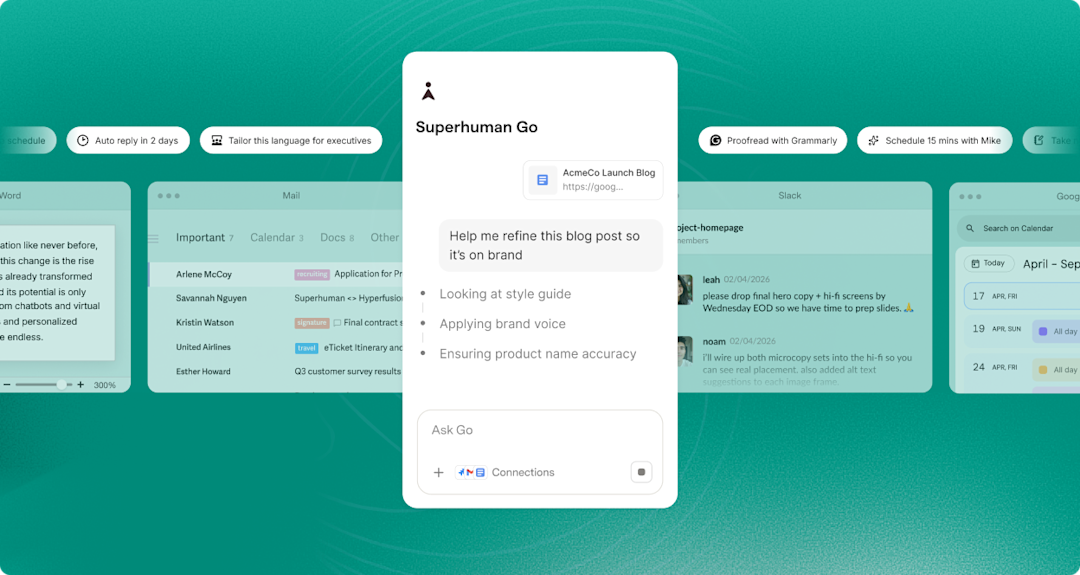
Grammarly Enterprise Deployment with Superhuman Go

Purchasing Grammarly licenses is only the first step.

A successful Grammarly Enterprise deployment requires planning, stakeholder involvement, user education, security reviews, and measurable business objectives.

Organizations that approach deployment strategically are more likely to achieve stronger adoption and better communication outcomes.

Step 1: Identify the Business Problem

Before starting a Grammarly Enterprise deployment, determine what the organization wants to improve.

Common objectives include:
  • Reducing writing errors
  • Improving customer responses
  • Increasing employee confidence
  • Standardizing brand terminology
  • Shortening editing cycles
  • Improving international communication
  • Supporting academic writing
  • Introducing governed AI assistance

Avoid deploying the platform without clearly defined outcomes.

According to Grammarly Business, organizations use Grammarly to improve communication quality and writing consistency across teams.

Learn more at Grammarly Business.

Step 2: Identify Users and Departments

List the teams that produce the highest volume of written communication.

Potential users include:

  • Sales
  • Marketing
  • Customer service
  • Human resources
  • Management
  • Corporate communications
  • Procurement
  • Researchers
  • Lecturers
  • Administrative personnel

Identifying the right users early helps ensure the Grammarly Enterprise deployment delivers measurable value and supports departments with the greatest communication needs.

Step 3: Select the Appropriate Plan

Different organizations may require different Grammarly plans.

Generally:

  • Smaller teams may evaluate Grammarly Pro
  • Larger organizations may consider Grammarly Enterprise
  • Educational institutions may assess Grammarly for Education

Plan selection should be based on user quantity, administrative requirements, governance needs, and organizational objectives.

A well-planned Grammarly Enterprise deployment begins with selecting the most suitable licensing model for long-term use.

Step 4: Complete a Security and Privacy Assessment

Security reviews should involve relevant stakeholders including:

  • Information technology teams
  • Information security teams
  • Legal departments
  • Compliance officers

Review areas may include:

  • Data processing
  • Administrative controls
  • Security documentation
  • Acceptable-use requirements
  • Sensitive information handling
  • User access management
  • Offboarding processes
  • Contractual obligations

Organizations evaluating a Grammarly Enterprise deployment should ensure platform usage aligns with internal governance requirements.

For more information, review the Grammarly Security Center.

Step 5: Conduct a Pilot Programme

A pilot helps validate business and technical requirements before wider deployment.

The pilot should evaluate:

  • Application compatibility
  • Suggestion quality
  • User experience
  • Time savings
  • Security restrictions
  • Adoption barriers
  • Training requirements

A well-executed Grammarly Enterprise deployment often begins with a small user group representing different departments and use cases.

Step 6: Configure Organizational Standards

Where available, organizations should prepare:

  • Style guidance
  • Brand tone standards
  • Approved terminology
  • Reusable snippets
  • Feature access policies
  • Internal AI usage recommendations

According to Grammarly Business, organizations can establish writing guidance to support consistency across teams.

This helps ensure the Grammarly Enterprise deployment aligns with internal communication standards.

Step 7: Train Employees

Training should include both product usage and responsible AI practices.

Employees should understand that they remain responsible for:

  • Facts
  • Confidentiality
  • Technical accuracy
  • Legal compliance
  • Originality
  • Final approval

Even with AI assistance, strong governance and user awareness remain critical components of a successful Grammarly Enterprise deployment.

Step 8: Measure Adoption and Results

Organizations should track the impact of the deployment using measurable indicators.

Possible metrics include:

  • Active users
  • Frequency of use
  • Employee satisfaction
  • Time saved
  • Reduction in corrections
  • Customer response quality
  • Consistency with brand standards

Tracking outcomes helps organizations determine whether the Grammarly Enterprise deployment is delivering expected business value.

Step 9: Review and Expand

Use pilot findings to refine policies, onboarding processes, and support materials before expanding access.

Lessons learned from early users can improve long-term adoption and help optimize future rollout phases.

A phased Grammarly rollout often creates stronger adoption than an organization-wide deployment completed all at once.

Grammarly Enterprise Deployment at a Glance

Helpful Grammarly Resources

  • Grammarly Business
    Explore enterprise writing assistance, administrative controls, analytics, and deployment capabilities.

  • Grammarly Security
    Review Grammarly’s security practices, privacy controls, and governance information.

  • Grammarly Compliance
    Learn about certifications, compliance frameworks, and security attestations.

  • Grammarly Enterprise
    Explore enterprise-focused capabilities, administration features, and deployment options.

Start Your Grammarly Enterprise Deployment with BINTARA

A successful Grammarly Enterprise deployment involves more than purchasing licenses. It requires planning, governance, onboarding, user adoption, and measurable objectives.

BINTARA can assist with license consultation, plan comparisons, quotations, procurement coordination, deployment discussions, and renewal planning.